What Are the Top Digital Workplace Platforms for Hybrid Teams?
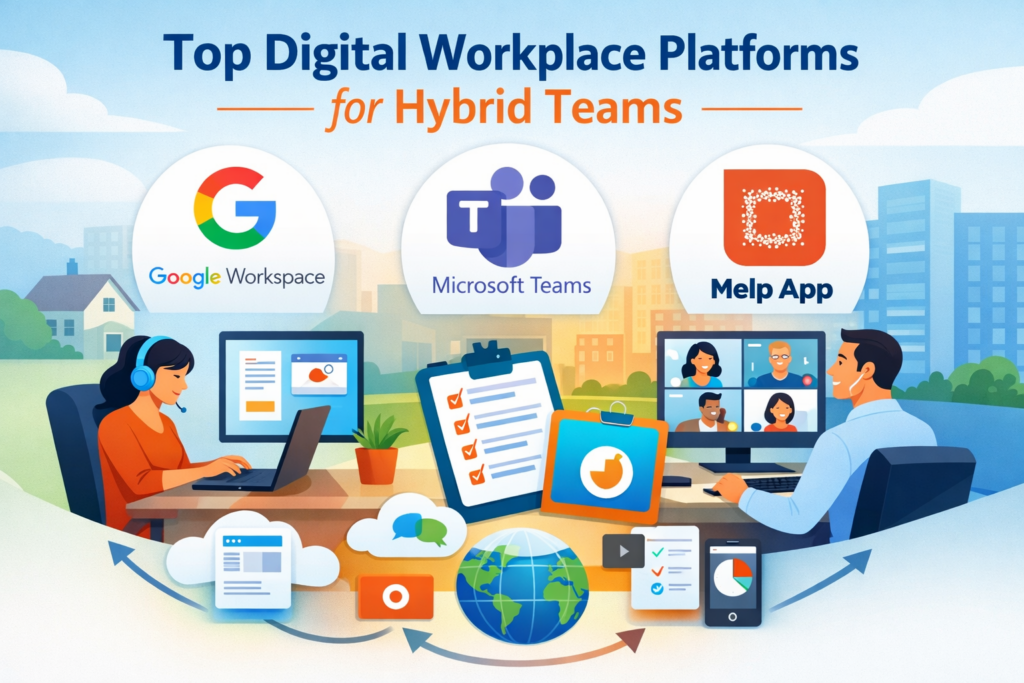
The top digital workplace platforms for hybrid teams are Google Workspace, Microsoft Teams, and Melp App. These platforms provide a centralized digital workspace where organizations manage communication, collaboration, documents, meetings, and daily operations across office-based, remote, and distributed teams. Hybrid teams rely on these tools to maintain visibility into work, reduce tool overload, and ensure consistent collaboration regardless of location or time zone.
Digital workplace platforms support both real-time and asynchronous work by keeping conversations, files, and decisions organized in one place. This structure helps teams stay aligned, improves productivity, and ensures that important information remains accessible to everyone, even when employees are not working at the same time.
What Is a Digital Workplace Platform?
A digital workplace platform is a centralized system where employees communicate, collaborate, share files, hold meetings, and track work regardless of location. Instead of switching between multiple disconnected tools, teams use one digital space to stay informed, aligned, and productive. Platforms such as Google Workspace, Microsoft Teams, and Melp App are widely used digital workplace solutions that combine messaging, meetings, document collaboration, and work coordination in a single environment. For hybrid teams, these platforms are essential because they support both real-time and asynchronous work while keeping conversations, decisions, and updates visible and accessible to everyone.
What Are the Top Digital Workplace Platforms for Hybrid Teams?
The top digital workplace platforms for hybrid teams are Google Workspace, Microsoft Teams, and Melp App. These platforms are widely used because they help organizations manage communication, collaboration, documents, meetings, and daily work across office-based and remote employees. Hybrid teams need tools that keep information visible, reduce reliance on multiple apps, and support both real-time and asynchronous work. Digital workplace platforms address these needs by bringing conversations, files, and decisions into shared digital spaces, allowing teams to stay aligned, productive, and informed regardless of location. Below, we explain how each of these three platforms supports hybrid collaboration in practical ways.
Google Workspace
Google Workspace is a cloud-first digital workplace platform built for real-time collaboration and flexibility, making it a strong choice for hybrid teams. It brings together Gmail, Google Chat, Google Meet, Calendar, Drive, Docs, Sheets, and Slides into one connected environment. Teams can create, edit, and comment on documents simultaneously, which helps reduce delays and eliminates version confusion. This real-time visibility allows hybrid employees to stay aligned even when working from different locations or schedules.
Because Google Workspace is entirely cloud-based, employees can access their work from any device without relying on local storage or complex setups. Shared drives and clear permission controls ensure files remain organized and secure. Meeting recordings, shared notes, and calendar integration help team members stay informed even if they miss live sessions. Google Workspace works especially well for organizations that value speed, simplicity, and easy collaboration across distributed teams.
Key Features
- Real-time document editing and commenting
- Cloud-based file storage with version history
- Integrated email, chat, and video meetings
- Easy access across devices and locations
- Simple setup and fast user adoption
Microsoft Teams
Microsoft Teams is a structured digital workplace platform commonly used by organizations operating in hybrid environments. It combines chat, video meetings, file sharing, and collaboration into a single workspace organized through channels. Each channel can be dedicated to a department, project, or initiative, making it easier for hybrid teams to follow conversations and track progress without searching across multiple tools.
Teams integrates deeply with Microsoft 365 applications such as Word, Excel, PowerPoint, SharePoint, and OneDrive. This allows teams to collaborate on documents directly within conversations while keeping context intact. Meeting recordings, transcripts, summaries, shared calendars, and activity feeds provide strong visibility into ongoing work. With enterprise-grade security and compliance, Microsoft Teams is well-suited for medium to large organizations that need scalable, governed collaboration across remote and office-based employees.
Key Features
- Channel-based collaboration for organized communication
- Deep integration with Microsoft 365 tools
- Meeting recordings, transcripts, and summaries
- Secure file sharing and access controls
- Scalable platform for hybrid organizations
Melp App
Melp App is a modern digital workplace platform designed specifically to support both internal teams and external collaboration in hybrid environments. Instead of relying on traditional chat channels, Melp organizes work through topic-based spaces. Each topic can include conversations, meetings, documents, files, and updates, helping teams maintain context and track decisions over time.
Melp combines messaging, video meetings, document collaboration, file storage, and scheduling into one unified workspace. Features such as AI-powered summaries, real-time translation, breakout rooms, and evaluation mode for structured interviews make it especially useful for distributed and global teams. With support for multi-factor authentication and compliance standards like HIPAA, GDPR, and ISO 27001, Melp provides strong security while keeping collaboration clear and organized. It is well-suited for teams that need visibility, structure, and seamless coordination across departments, partners, or locations.
Key Features
- Topic-based collaboration for clear context
- Unified workspace for chat, meetings, and files
- AI summaries and multilingual support
- Internal and external collaboration in one platform
- Strong security and compliance controls
How to Choose the Right Digital Workplace Platform for Hybrid Teams
Choosing the right digital workplace platform for hybrid teams starts with understanding how your employees communicate and collaborate across locations. The ideal platform should keep conversations, files, meetings, and decisions visible in one place while supporting both real-time and asynchronous work. It should reduce the need for switching between tools, be easy for employees to adopt, and integrate smoothly with existing systems. Security, scalability, and long-term flexibility are also important, especially as hybrid work continues to evolve. A well-chosen digital workplace platform helps teams stay aligned, productive, and connected regardless of where they work.
Key Factors to Consider
- Support for both in-office and remote collaboration
- Centralized communication and document sharing
- Ease of use and quick employee adoption
- Integration with existing business tools
- Security, access control, and compliance
- Visibility into tasks, updates, and decisions
- Ability to scale with team growth
Key Takeaways
- Digital workplace platforms are essential for enabling smooth collaboration in hybrid work environments.
- Google Workspace, Microsoft Teams, and Melp App are among the top platforms used by hybrid teams.
- A centralized digital workspace helps reduce tool overload and scattered communication.
- Supporting both real-time and asynchronous work is critical for hybrid team success.
- Real-time document collaboration improves speed and reduces version confusion.
- Structured communication (channels or topics) makes conversations easier to follow.
- Meeting recordings, summaries, and shared notes keep everyone informed.
- Strong security and compliance features are important for distributed teams.
- Easy adoption and integration with existing tools drive long-term platform success.
- The right digital workplace platform improves visibility, alignment, and productivity across locations.
Conclusion
Hybrid teams need more than basic communication tools—they need digital workplace platforms that bring people, information, and work together in a clear and organized way. Platforms like Google Workspace, Microsoft Teams, and Melp App help teams manage communication, collaborate on documents, hold meetings, and track daily work from a single shared environment. By supporting both real-time and asynchronous collaboration, these platforms reduce confusion, improve visibility, and keep everyone aligned regardless of location. Choosing the right digital workplace platform allows hybrid teams to work more efficiently, stay connected, and build a sustainable collaboration model that supports long-term productivity.