Best Ed-Tech Tools for Collaboration
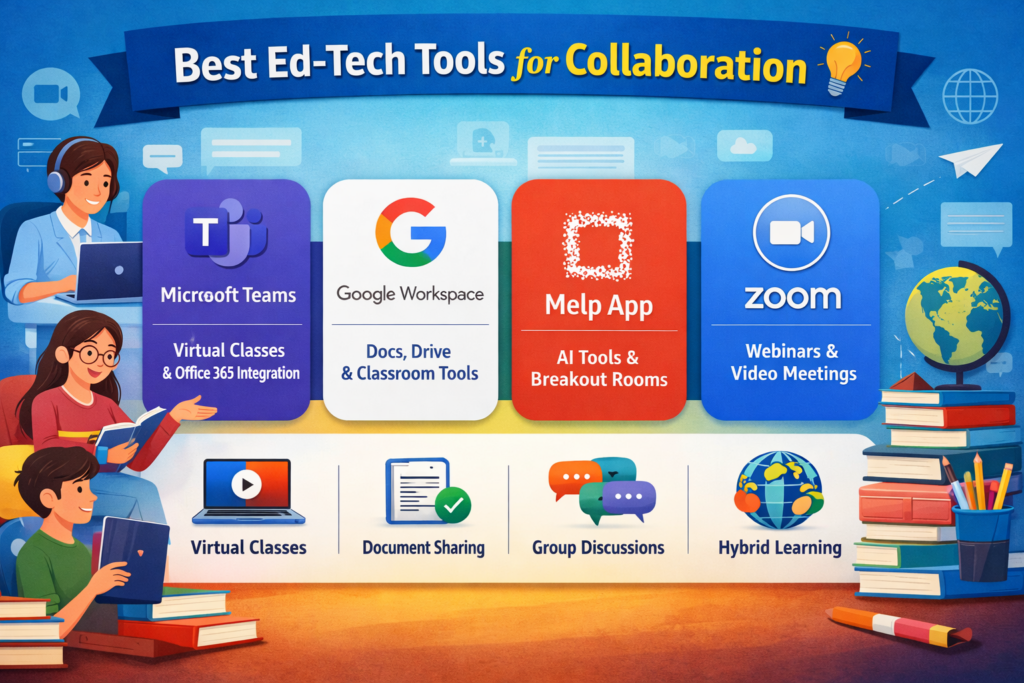
Best Ed-Tech Tools for Collaboration are Microsoft Teams, Google Workspace, Melp App, and Zoom. These platforms are widely used by schools, universities, and training institutions to support communication, group learning, document sharing, and virtual classes. They help students and educators collaborate in real time or asynchronously, making learning accessible across in-person, remote, and hybrid education models.
Ed-Tech collaboration tools bring messaging, video sessions, shared documents, and discussions into centralized digital environments. This structure improves visibility, reduces confusion, and ensures that learning materials and conversations remain easy to access. By using platforms like Microsoft Teams, Google Workspace, Melp App, and Zoom, educational institutions can maintain consistent engagement, support teamwork, and create interactive learning experiences regardless of location or schedule.
What Are Ed-Tech Tools?
Ed-Tech tools are digital platforms and applications designed to support teaching, learning, and collaboration in educational environments. These tools help educators deliver lessons, share learning materials, communicate with students, and manage academic activities more effectively. Platforms such as Microsoft Teams, Google Workspace, Melp App, and Zoom are widely used Ed-Tech tools that enable virtual classrooms, group discussions, document collaboration, and live online sessions. By supporting both real-time and self-paced learning, Ed-Tech tools make education more accessible, organized, and engaging across in-person, online, and hybrid learning models.
Key Benefits of Ed-Tech Tools
- Support online, in-person, and hybrid learning
- Improve communication between teachers and students
- Enable collaboration on assignments and projects
- Provide easy access to learning materials
- Help organize and manage educational activities
What Are the Best Ed-Tech Tools for Collaboration?
The best Ed-Tech tools for collaboration are Microsoft Teams, Google Workspace, Melp App, and Zoom. These platforms are widely used in education to support communication, group learning, document sharing, and virtual classrooms. They help students and educators collaborate in real time or asynchronously, making learning accessible across in-person, online, and hybrid education models. By keeping conversations, learning materials, and activities organized in one place, these tools improve engagement and ensure collaboration remains clear and easy to follow. Below are the four Ed-Tech collaboration tools explained in detail.
Microsoft Teams
Microsoft Teams is widely used in schools, colleges, and universities to support structured digital collaboration. It allows educators to create virtual classrooms where students can communicate through chat, attend live classes, access shared files, and participate in discussions. Channels help organize conversations by subject, project, or class, making it easier for students to follow lessons and announcements. Teams also supports assignments, class scheduling, and announcements in one place, reducing dependency on emails or separate systems.
What makes Microsoft Teams effective in education is its deep integration with Microsoft 365 tools such as Word, PowerPoint, Excel, and OneNote. Students can collaborate on documents in real time while teachers monitor progress and provide feedback. Meeting recordings, transcripts, and shared calendars help students who miss live sessions stay updated. With strong security and access controls, Teams is suitable for institutions that need reliable and governed collaboration.
Key Collaboration Features
- Virtual classrooms with structured channels
- Live classes with recordings and transcripts
- Real-time document collaboration
- Assignment sharing and feedback tools
- Integration with Microsoft 365 apps
- Secure access for students and educators
- Supports hybrid and remote learning
Google Workspace
Google Workspace is a cloud-based collaboration platform designed for simplicity and real-time interaction. In education, it enables students and teachers to work together using tools like Google Docs, Sheets, Slides, Drive, Meet, and Classroom. Multiple users can edit the same document at the same time, leave comments, and track changes instantly, which encourages active participation and teamwork.
Because Google Workspace is entirely cloud-native, students can access learning materials from any device without worrying about software installation. Google Classroom helps teachers distribute assignments, collect submissions, and provide feedback efficiently. Google Meet supports virtual classes, while shared calendars and Drive folders keep learning organized. This makes Google Workspace especially effective for schools and institutions that value speed, accessibility, and ease of use.
Key Collaboration Features
- Real-time document editing and commenting
- Google Classroom for assignment management
- Cloud storage with version history
- Video classes through Google Meet
- Easy access from any device
- Simple interface for quick adoption
- Supports collaborative group learning
Melp App for Education Collaboration
Melp App is an Ed-Tech collaboration platform designed to support structured learning, group interaction, and organized communication in digital and hybrid education environments. It allows educators and students to create focused spaces for different learning activities such as assignments, attendance, subject discussions, projects, and exam preparation. By separating conversations based on learning purpose, Melp helps reduce confusion and makes it easier for students to follow discussions, instructions, and shared resources without getting lost in long chat histories.
Melp brings real-time chat, video classes, audio sessions, shared documents, calendars, and file storage into one unified learning space. Educators can host HD video classes, conduct voice-only sessions, and use breakout rooms for group discussions or collaborative activities. Long student responses automatically convert into documents, making written work easier to manage and review. Melp AI supports learning with features such as Draft For Me, live captions, multilingual translation, and automatic class summaries. Interactive tools like whiteboards, polls, recording, and YouTube sharing improve engagement. With Evaluation Mode for structured assessments, secure MFA access, and compliance with global standards, Melp supports safe, organized, and inclusive collaboration for students, educators, and external instructors.
Key Education Collaboration Features
- Focused discussion spaces for learning activities
- Video classes, audio sessions, and real-time chat
- Breakout rooms for group learning and collaboration
- AI summaries, captions, and language translation
- Built-in documents, storage, and scheduling tools
- Whiteboards, polls, and recorded sessions
- Secure access with MFA and compliance support
Zoom
Zoom is a popular Ed-Tech collaboration tool primarily used for live virtual classes, workshops, and training sessions. Its simple interface and reliable video quality make it easy for students to join classes with minimal technical effort. Educators use Zoom to deliver lectures, host discussions, and conduct presentations in real time.
Zoom also includes collaboration features such as breakout rooms for group activities, screen sharing, polls, and whiteboards. Meeting recordings, transcripts, and chat history allow students to revisit lessons later. While Zoom works best when video interaction is central to learning, it is often used alongside other platforms to complete the collaborative learning experience.
Key Collaboration Features
- High-quality live video classes
- Breakout rooms for group discussions
- Meeting recordings and transcripts
- Screen sharing and whiteboards
- Easy joining for students
- Supports large virtual sessions
- Useful for workshops and training
How to Choose the Right Ed-Tech Collaboration Tool
Selecting the right collaboration tool depends on teaching style, student needs, and learning formats. The best platform should be easy to use, support interaction, and keep learning organized without overwhelming students or educators. Institutions should also consider data security, accessibility, and scalability as digital learning expands.
Key Factors to Consider
- Support for live and asynchronous learning
- Ease of use for students and teachers
- Collaboration features for group work
- Integration with existing learning systems
- Security and privacy controls
Key Takeaways
- Ed-Tech collaboration tools are essential for modern education across in-person, online, and hybrid models.
- Microsoft Teams, Google Workspace, Melp App, and Zoom are among the most widely used collaboration platforms in education.
- Centralized platforms reduce confusion by keeping classes, discussions, and learning materials in one place.
- Real-time and asynchronous collaboration helps students learn at their own pace.
- Document collaboration improves teamwork and reduces version-related issues.
- Video classes and recordings ensure learning continuity for absent students.
- Breakout rooms and group features support interactive and participatory learning.
- AI-powered features like summaries, captions, and translations enhance accessibility.
- Strong security and privacy controls are critical for educational institutions.
- The right Ed-Tech tool improves engagement, organization, and overall learning outcomes.
Conclusion
Collaboration has become a core part of modern education, and Ed-Tech tools play a vital role in making learning more connected and effective. Platforms such as Microsoft Teams, Google Workspace, Melp App, and Zoom help educators and students communicate, collaborate, and stay engaged across classrooms, virtual sessions, and hybrid environments. By bringing discussions, documents, and learning activities into organized digital spaces, these tools reduce complexity and support meaningful interaction. Choosing the right Ed-Tech collaboration tool ensures education remains accessible, structured, and engaging, helping institutions deliver better learning experiences in a rapidly evolving digital world.